Kilts for Wedding - Scotland


There are few sights more striking at a Scottish wedding than a groom stepping forward in a perfectly fitted kilt tartan swaying, Ghillie brogues gleaming, and a Prince Charlie jacket buttoned with pride. In Scotland, the wedding kilt is not simply formalwear. It is a declaration of identity, lineage, and belonging to a tradition that stretches back centuries.
At Kilt Outfit, we have been hand-crafting kilts and full Highland dress outfits for over 20 years. Our artisans produce every piece to measure, which means when we talk about wedding kilts for Scotland, we speak from genuine experience not theory. This guide covers everything you need to know to dress impeccably on your wedding day, from choosing the right tartan to understanding the finer points of kilt etiquette that competitors often overlook.
Why the Kilt Remains Scotland's Wedding Dress of Choice
Scotland's relationship with the kilt at weddings goes deeper than fashion. The garment connects the wearer to clan heritage, regional pride, and a living cultural tradition. While formal suit styles have changed decade by decade, the Highland kilt has endured and grown more popular precisely because it carries meaning that no suit can replicate.
Modern Scottish grooms are not limited to a narrow historical template. Today's wedding kilt market offers everything from full ceremonial Highland dress with fly plaid and dress sporran, to contemporary Argyll outfits in muted, modern tartans. The common thread is quality, fit, and authenticity values that Kilt Outfit has built its reputation on.
Choosing the Right Tartan for Your Scottish Wedding
Tartan selection is the most personal decision in planning your wedding kilt. It sets the colour palette, signals your clan affiliations, and determines how the full outfit will look in photographs for decades to come.
Clan Tartan: The Traditional Choice
If you have Scottish heritage, your first step is to research your clan tartan. Most Scottish surnames map to one or more clans, each with a registered tartan pattern. Wearing your clan tartan at your wedding is a mark of respect for your ancestry and an act of cultural continuity. If the bride's family also has a Scottish background, some grooms choose to honour both clans through accessories a kilt pin or sporran charm in the bride's tartan, for example.
District and Universal Tartans
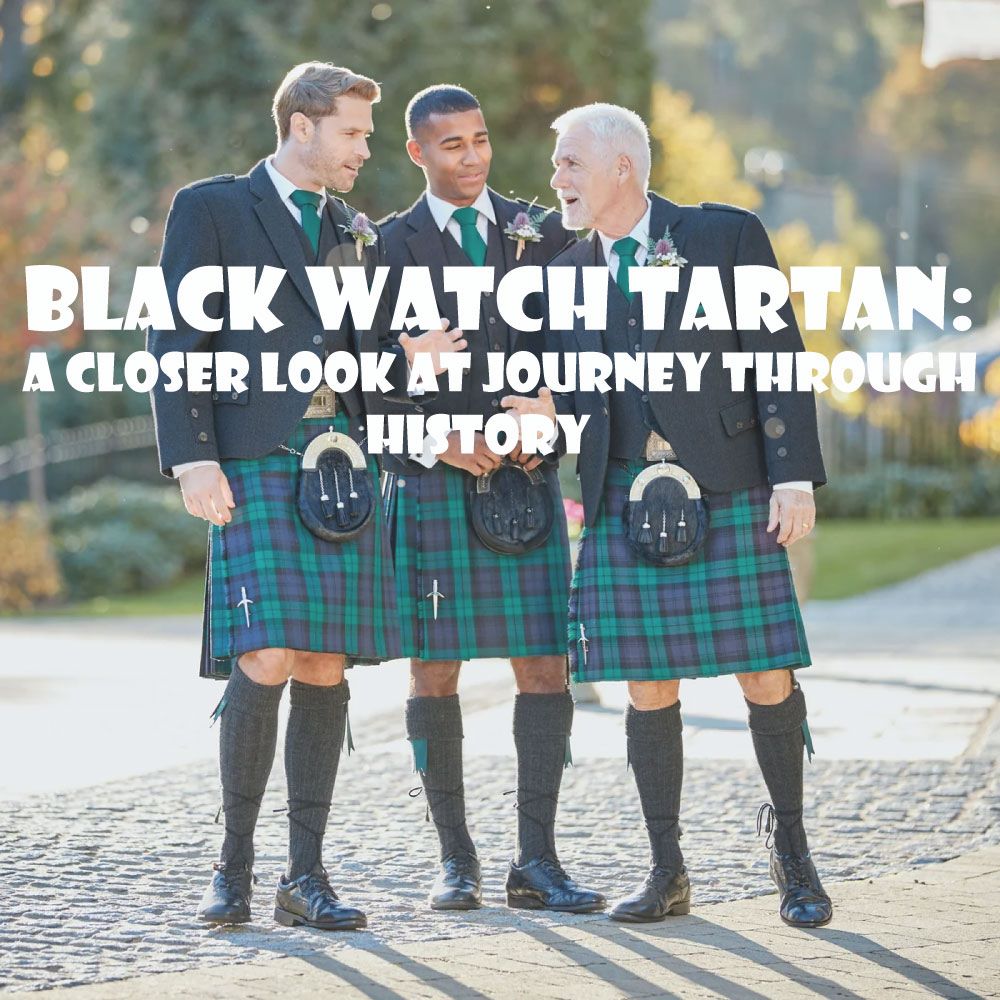
Not every groom has a direct Scottish clan connection, and that is entirely fine. District tartans such as the Caledonia, Flower of Scotland, or Black Watch are not clan-specific and can be worn by anyone. These make excellent choices for grooms who want to embrace Scottish tradition authentically without misappropriating a clan they have no connection to.
Modern and Muted Tartans
Contemporary Scottish weddings increasingly feature muted, weathered, or 'ancient set' versions of traditional tartans. These use softer dye tones that photograph beautifully and complement a wide range of wedding colour schemes. Tweed kilts in earth tones have also grown popular for outdoor, rustic, or castle weddings in 2025 and 2026.
Kilt Outfit Tip
When selecting your tartan, order fabric swatches alongside your bride's dress fabric and your wedding colour palette. The best tartan choice is one that feels personally meaningful and photographs harmoniously with the full wedding party not simply the boldest or most striking pattern.
The Complete Scottish Wedding Kilt: Every Component Explained
A proper Scottish wedding kilt consists of seven to ten distinct components. Understanding each piece what it is, why it exists, and how to wear it correctly — is what separates a truly impressive Highland dress from something that looks hastily assembled.
1. The Kilt
The kilt itself should be made from 16oz wool fabric for formal occasions. It should sit firmly at the natural waist, not the hips, and fall to the centre of the knee not above or below. A well-made kilt will have a minimum of eight yards of fabric (sometimes called an eight-yard kilt) with deep pleats to the sett or stripe, depending on the tartan. At Kilt Outfit, every wedding kilt is made to your exact measurements, eliminating the fitting issues that plague off-the-shelf garments.
2. The Jacket
The jacket is the element that most determines the formality of the outfit. The two dominant choices for Scottish weddings are:
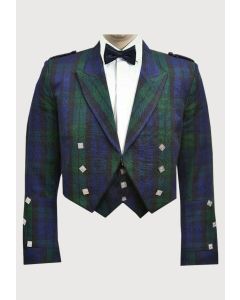
- Prince Charlie Jacket — The most formal option, this short black jacket with silver buttons and decorative braid on the cuffs and lapels is the correct choice for formal evening weddings and grand ceremonial occasions. It pairs exclusively with a five-button waistcoat.
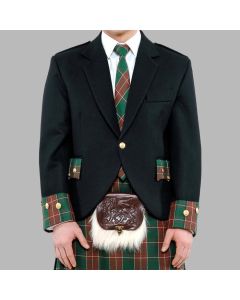
- Argyll Jacket — A step below the Prince Charlie in formality but still entirely appropriate for daytime weddings, outdoor celebrations, and less formal ceremonies. It is a longer jacket than the Prince Charlie and is available in a range of colours, making it more versatile for contemporary Scottish weddings.
- Tweed Jacket — Increasingly popular for rustic, countryside, or barn weddings in Scotland. Pairs beautifully with muted tartans and gives a relaxed Highland elegance that suits informal venues and daytime photography.
3. The Waistcoat
The waistcoat is worn between the jacket and the shirt and should coordinate with the jacket in colour and formality. For a Prince Charlie outfit, a matching five-button black waistcoat is standard. For an Argyll or tweed jacket, a complementary tartan waistcoat can add depth and visual interest to the overall outfit.
4. The Sporran
The sporran — worn at the front of the kilt — serves a practical purpose (pockets are absent from the kilt) and a decorative one. Wedding sporrans fall into two main categories:
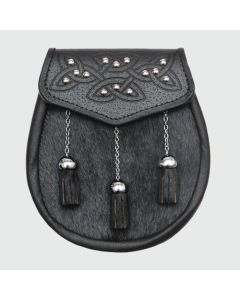
- Dress Sporran — Features a fur front with silver or chrome cantle (the metal top plate). This is the correct sporran for formal weddings and evening wear.
- Semi-Dress Sporran — A hybrid of dress and day sporran, with a fur-covered front body and a silver cantle. Appropriate for daytime ceremonies and slightly less formal settings.
5. The Shirt and Neckwear
For formal Highland dress, a white Ghillie shirt (a collarless, lace-front shirt) is the traditional choice. Alternatively, a standard white formal shirt with a wing or cutaway collar works well with either jacket style. Neckwear for Scottish wedding kilts includes:
- Ruche (or Jabot) Tie — A decorative lace neck piece worn with the Ghillie shirt. Creates a distinctly Scottish formal look.
- Black Bow Tie — The correct option with a Prince Charlie jacket at formal or evening events.
- Silver Grey Tie or Tartan Tie — Popular for daytime Argyll outfits, offering a softer, contemporary look.
6. Kilt Hose and Flashes
Kilt hose are knee-high socks worn with the kilt, folded just below the knee and held in place by sock garters topped with flashes. Flashes should match your tartan (or at minimum coordinate with it) and are worn on the outside of the left leg, pointing left. This is one of the small details that distinguishes a well-dressed Highland gentleman from someone who has simply hired a kilt without understanding how to wear it.
7. Ghillie Brogues
Ghillie brogues are the traditional shoe worn with Highland dress. These lace-up leather shoes have long laces that cross over the tongue and tie around the ankle. They should be polished black leather for formal weddings. Ensure you practise tying them before the wedding day — the technique takes a little getting used to.
8. The Sgian Dubh
The sgian dubh (pronounced 'skeen doo') is a small ceremonial knife tucked into the top of the right kilt hose with only the handle visible. At modern Scottish weddings it is purely decorative, but it remains an expected component of full Highland dress. Choose a handle that complements your sporran's metalwork silver for silver, chrome for chrome.
9. The Kilt Belt and Buckle
A leather kilt belt threaded through the kilt's belt loops and fastened with a large ornate buckle adds structure to the kilt's front apron. The buckle should be silver or antique pewter for formal occasions. Avoid overly decorative clan crests on the buckle unless they represent your own lineage.
10. Optional: Fly Plaid and Plaid Brooch
For the most ceremonial form of Highland dress, a fly plaid — a length of tartan fabric worn over the left shoulder and pinned with a brooch — elevates the outfit to its most formal expression. This is typically reserved for the groom or the most senior members of the wedding party, and it creates a genuinely majestic silhouette for wedding photographs.
Dressing the Wedding Party: Groom, Groomsmen, and Guests
The Groom
The groom should wear the most formal version of the kilt. This typically means a Prince Charlie jacket with matching waistcoat, dress sporran, fly plaid (optional), and the full complement of accessories. The groom's tartan is usually his clan tartan, though couples often choose a shared 'wedding tartan' that all participants wear.
The Best Man and Groomsmen
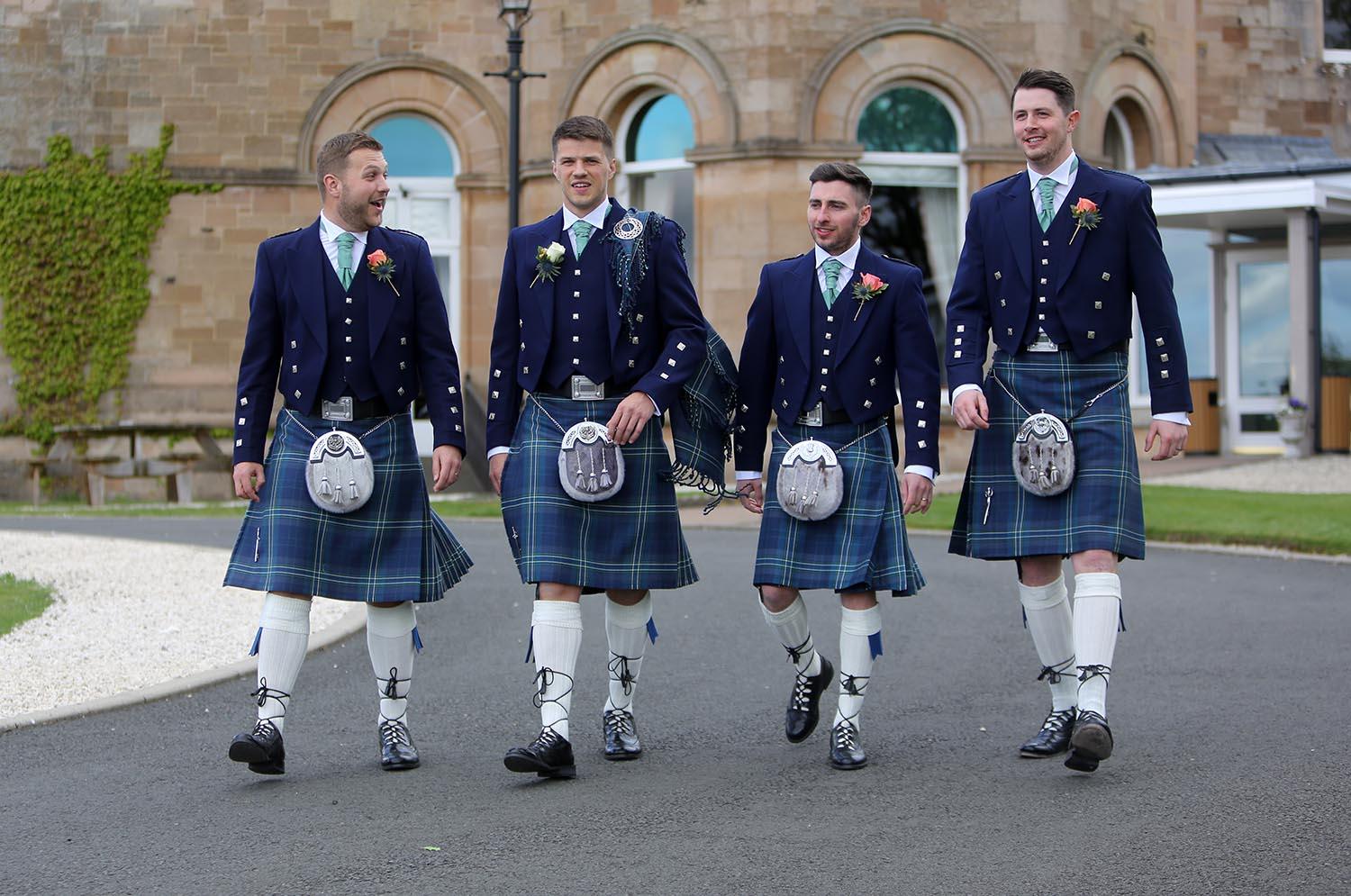
Groomsmen traditionally wear the same tartan as the groom but a slightly less formal jacket usually the Argyll where the groom wears a Prince Charlie. This subtle difference makes the groom visually distinct without creating jarring contrast. Sporrans and accessories can match or coordinate.
Male Guests
Scottish wedding guests wearing kilts should choose a neutral tartan (such as Black Watch, Caledonia, or their own clan tartan) rather than the groom's chosen tartan. Copying the wedding party's tartan is considered poor etiquette. An Argyll jacket and semi-dress sporran is the appropriate dress code for kilt-wearing guests.
The Father of the Bride and Father of the Groom
Fathers of the wedding couple traditionally wear their own clan tartan in the same formality level as the groomsmen Argyll jacket, full accessories. If both fathers have Scottish heritage, each wearing their own clan tartan adds beautiful visual variety to the wedding party.
Scottish Wedding Kilt Etiquette: The Rules That Matter
There are a handful of etiquette rules that experienced kilt wearers follow instinctively but that are rarely written down clearly. Here is our honest guide, built from two decades of helping Scottish grooms dress well.
- Never mix formality levels: A Prince Charlie jacket requires a formal waistcoat and dress sporran. An Argyll jacket pairs with a semi-dress sporran. Mixing elements from different formality levels (a Prince Charlie with a casual daywear sporran, for example) signals unfamiliarity with Highland dress.
- The kilt should sit at the natural waist, not the hips. A kilt worn at the hips looks wrong and will gap and move uncomfortably throughout the day.
- Flashes go on the outside of the leg, pointing outward. Left flash points left, right flash points right.
- The sgian dubh goes in the right hose only. Never in the left.
- Do not attach clan-specific accessories (clan crest kilt pin, clan crest sgian dubh handle) if that clan is not your own.
- Hire vs. own: For a wedding, we strongly recommend purchasing rather than hiring. A bespoke, made-to-measure kilt will fit perfectly and remain in your wardrobe for life a hire kilt rarely fits as well and can look tired or poorly fitted in photographs.
Wedding Kilt Styles for Different Scottish Wedding Settings
Scotland offers an extraordinary range of wedding venues, and the kilt should complement the setting as much as the ceremony itself.
Castle Weddings
Full ceremonial Highland dress Prince Charlie jacket, dress sporran, fly plaid, and full accessories is entirely appropriate and genuinely impressive in a castle setting. Bold clan tartans work beautifully against stone walls. This is the setting where the most formal expression of the kilt comes into its own.
Outdoor Glen or Lochside Weddings
A more relaxed Argyll or tweed jacket with a weathered or muted tartan suits Scotland's dramatic outdoor landscapes. Earth tones and ancient-set tartans photograph beautifully against heather, loch water, and Scottish sky. Ensure your Ghillie brogues are good quality leather for uneven ground.
City Hotel or Formal Venue Weddings
Urban Scottish weddings tend toward the Prince Charlie or Argyll jacket in a sharp, contemporary tartan. Modern muted tartans or universal tartans like the Royal Stewart or Black Watch in their muted variants are popular for city weddings where the colour palette tends to be more controlled.
Barn and Rustic Weddings
Tweed kilts or tweed jackets paired with a classic tartan kilt are ideal for barn and farmhouse weddings. A Harris Tweed jacket with a complementary tartan kilt creates a genuinely distinctive and photogenic look that feels rooted in Scottish rural tradition without being overly formal.
Our Recommended Wedding Kilt Outfits


Getting Your Wedding Kilt Measurements Right
A wedding kilt that does not fit perfectly undermines the entire outfit. Unlike a suit where a tailor can make last-minute alterations, a kilt made to the wrong measurements will not fall correctly, will move awkwardly when you walk, and will look wrong in every photograph.
At Kilt Outfit, we provide a comprehensive self-measuring guide that walks you through every measurement needed for a perfect fit. Key measurements for a wedding kilt include:
- Natural waist measurement — measured around the natural waist (typically 1–2 inches above the navel), not the trouser waist.
- Hip measurement — taken at the widest point of the hips, usually 7–9 inches below the natural waist.
- Kilt length — measured from the natural waist to the centre of the knee.
- Seat measurement — taken around the fullest part of the seat.
We recommend placing your wedding kilt order at least 8–10 weeks before your wedding date to allow adequate time for production and any adjustments. During peak wedding season (May through September in Scotland), lead times can extend, so earlier ordering is advisable.
Frequently Asked Questions: Kilts for Wedding Scotland
Ready to Order Your Scottish Wedding Kilt?
A Scottish wedding deserves Highland dress that has been made with the same care and commitment you are bringing to the day itself. At Kilt Outfit, every wedding kilt is hand-crafted by our skilled artisans to your precise measurements from the wool fabric and tartan pattern you choose, through to the last stitch of the pleats.
With over 20 years of experience dressing Scottish grooms, groomsmen, and wedding guests, we understand exactly what a wedding kilt needs to look and feel like on the most important day of your life.
Shop Your Wedding Kilt Today
Browse our full collection of made-to-measure wedding kilt outfits, Prince Charlie sets, Argyll packages, tartan accessories, and full Highland dress at kiltoutfit.co.uk. Use our comprehensive measuring guide to get your exact fit and contact our team if you need any guidance on tartan selection, jacket choice, or accessory coordination. We are here to help you look exceptional.
Related Products